
welcome to MINNA emirate
SHORT HISTORY OF MINNA
Minna derived its name from Gbagyi (Gwari) words min and na Min means spray and ha’ means fire. The town was originally in the hill-top at Sayako and had walls known locally as ganuwa built around it was then the traditional administrative headquarters of the Gwaris. There were also Gbagyi (Gwari) towns and villages in and around the present site of modem Minna Historically at a certain period of the year villages far and near Min-na town on the hilltop used to extinguish their fire for a New Year fire which was usually fetched from Minna town This practice of annual extinguishing or spraying of fire mathematically gave the town on the hill its name Minna with single ‘n’ The additional ‘n in the word Minna’ was the making of Europeans to suit their pronunciation. Other villages that make up modern Minna are Gbangbopi, Gbadnase, Shango, Bosso, Ebmi (Maikunkele) and Gbadiko. belonged to Bosso District, which is also under the Chief of Bosso who had his palace right in the heart of Minna. The construction of railway line from Baro to Minna in 1911 is one of the factors that led to its becoming the Administrative Headquarters of the old Niger province which subsequently paved way for strangers to settle in the town Some settled permanently while others only worked as civil servants and some took up trading. The strangers who naturally could not live with the natives on the hills nor surrounding villages built their huts down hills.
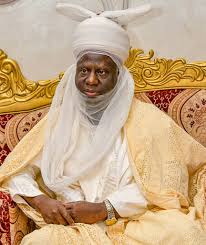
The strategic location of Minna with relatively easy accessibility from all parts of the state and other parts of the country through the railway line made it suitable for a state capital. Its proximity to the new Federal Capital Abuja exposes it further to the outside world.The Usmaniyya Chiefdom of Minna began with the appointment of late Alhaji Ahmed Bahago (Usmaniyya) Order of the Niger (OON) as the first Chief of Minna on 11th October, 1950, by the then Northern Regional Government. Thirty years later, he was upgraded to a first class Emiron Saturday, 26th December, 1981 by then second Republic Governor of Niger State, Mallam Awwal Ibrahim.
Upon his death on 16th October 1987, his son, Alhaji (Dr.) Umaru Faruq Bahago, Commander of the Niger (CON) was appointed as the 2nd First Class Emir of Minna on Sunday, 6th March, 1988. The Emirate presently consists of 18 Districts
ABOUT MINNA
CLIMATE
Minna lies on latitude 9037 North and Longitude 6330 East on a geographical base of undifferentiated basement complex of mainly queisis and magnetite. The emirate enjoys a climate typical of the middle Belt Zone. The rainy season lasts between 190-200 days Mean annual rainfall is 133mm (52 inches) with September recording the highest rains of 300mm (11,7inches) The mean monthly temperature is highest in March at 30.50c(85of) and lowest in August at 22 300c (720f).
OCCUPATION
The main occupation of the indigenes of Minna emirate is farming. This is a predominant occupation that takes place all year round. All manners of crops are cultivated by the people. Since the colonial period, Minna the headquarters of the emirate has become a cosmopolitan city with most of the residents engaging in white collar jobs. As a state capital majority of the inhabitants are civil servants.
RELIGION
The proximity of Minna to Abuja, the Federal Capital is one added advantage for the location of industries. This is due to the fact that the town has a fertile land which is conducive for Agro based industries. Already, banking and insurance business facilities are available in the town Minna, which was a small scale gold running town, now has many small scale ventures such as sawmills, marble quarry and furniture making industries. There are many other factories in the pipe line for the town which include bottling companies, flour mills e.t.c. Minna is also rich in mineral resources. Investment opportunities therefore exist to tap the potentialities of these minerals for exports and for setting up of small and medium enterprise
EDUCATION
Bida emirate is blessed with modern educational institutions. Apart from the numerous public and private primary schools, there are post primary institutions in the emirate. In addition, Bida emirate also has the following tertiary institutions of learning. These are the Federal Polytechnic, The Edu soko university, the School of Nursing and the Bida Campus of the State Polytechnic, Zungeru. Bida also hosts the Federal Medical Centre while the school of Agric is located at mokwa.
COMMUNICATION
The general post office situated along Mu’azu Mohammed Road off Old Airport Road also offers telex services. There is a provision for daily services delivery and dispatch of mails within Minna and to many parts of the country and the world at large.
Similarly telephone services are offered by mobile telephone operators that connect nationally and internationally
TRANSPORTATION
The rehabilitation of Tegina-Zungeru-Minna-Izom Trunk a road has improved the accessibility of Minna road Suleja is now only one and a half hours drive instead of two hours. The Minna – Suleja road and the road linking Minna-Zungeru-Tegina with Kaduna have brought the town much more directly into the main national traffic movement. On the other hand. Minna Sarkinpawa Kaduna road when completed will also link the town directly into main national traffic movement. The improved accessibility will open up the emirate.
MEDICAL FACILITIES
Health Care Delivery Centers in Minna and the and IBB Specialized Hospitals are being augmented by various private health institutions. Due to the importance attached to health care delivery system by the state and Chanchaga local governments, several clinics have been established in the town. Apart from these, there are maternity and Amenity wards with necessary equipment and facilities at the Minna General Hospital
INVESTMENT OPPORTUNITIES
Islam and Christianity are the main religions of the people of Minna emirate.